Blog
Can windbreak fencing help protect plants from strong winds?


A garden can be perfectly healthy one day and look battered after a spell of strong wind. Young plants may bend or snap, delicate leaves can become damaged, and freshly planted crops can struggle to establish themselves. If your garden, allotment or growing area is exposed to persistent winds, a windbreak fence can provide a practical way of creating a little shelter without completely shutting the air out.
The key is understanding what windbreak fencing actually does. It is not designed to act like a solid wall. Instead, the mesh allows some air to pass through while reducing the force and speed of the wind reaching the plants behind it.
Why is strong wind a problem for plants?
Wind can affect plants in several ways, and the damage is not always immediately obvious. Strong gusts can physically bend stems, tear leaves and damage young shoots. Plants that have only recently been planted are particularly vulnerable because their roots may not yet be firmly established.
Wind can also dry plants out faster. Even when the soil contains plenty of moisture, persistent airflow can increase water loss from leaves. This can leave plants looking tired or stressed, particularly during dry weather.
How does windbreak fencing reduce wind?
A solid barrier might seem like the obvious solution, but completely blocking strong wind can create its own problems. Air hitting a solid surface has nowhere to pass through easily, which can lead to turbulent airflow around the barrier.
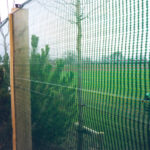
Mesh windbreak fencing takes a different approach. Its small openings allow air to pass through gradually, helping to diffuse the airflow rather than stopping it abruptly.
For instance, our fine mesh windbreak fencing is designed to reduce wind speed by up to 55 percent, depending on conditions and installation. This can create a calmer area behind the fence where plants, crops and young trees are less exposed to harsh gusts.
Where could a windbreak be useful?
Wind protection can be particularly valuable in exposed gardens, allotments, agricultural areas and coastal locations.
A carefully positioned windbreak fence can help protect the following.
- Young trees and newly planted shrubs
- Vegetable beds and growing areas
- Delicate plants and crops
- Polytunnels and sheltered growing spaces
Coastal sites can present an additional challenge because strong winds may carry sand and debris. Windbreak mesh can help reduce wind speed and may limit the amount of sand being blown into vulnerable areas.
A calmer environment can give plants a better chance
Strong winds cannot always be avoided, particularly in open or coastal locations. However, the conditions around plants can be changed.
A well-positioned windbreak fence can reduce the force of gusts, limit physical damage and create a more sheltered growing environment. Combined with sensible planting, watering and support for vulnerable plants, it can be a simple way to make an exposed growing area more manageable.
At Ground Stores, we supply practical windbreak fencing designed to reduce wind speed and create more sheltered conditions for crops, saplings, and young trees. We offer our windbreak fencing in a 1m x 25m roll, made from UV-stabilised HDPE with a fine 12mm x 5mm mesh. With reinforced edges and the ability to cut it to size, it can be adapted as needed.
If strong winds keep flattening your plants, our windbreak fencing is a simple way to give them some shelter.